
Why does AI sometimes fail in corporate settings?
Short answer: AI can fail when it is added next to the work instead of into it. People get another tool to learn, check and maintain, and the time it saves goes on extra homework and operational disruption. This is one reason, not the only one.
The integration problem
AI needs to fit how work already gets done. Adding a standalone tool without integrating the process can leave people doing the checking, copying and maintenance themselves.
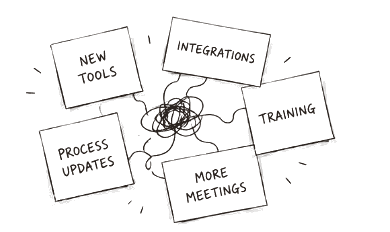
New tools, integrations, training, process updates and more meetings land on the same people.
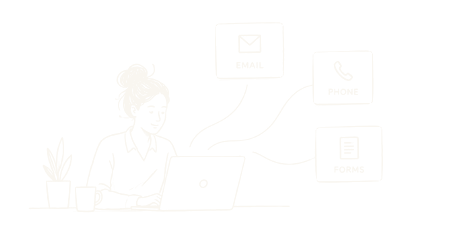
The AI reaches people through the email, phone calls and forms they already use.
Three things that help:
- Managed: someone owns the process mapping, integration and ongoing upkeep, so leadership can keep running the human organisation.
- Embedded: AI works inside the tools people already use, such as Slack, phone calls, email and forms, rather than adding another place to work.
- Evolving: the solution can adapt as markets, teams, processes and services change, rather than needing frequent rebuilds.
Where we come in
Our AI strategy work starts by finding the friction before choosing a fix. When the fix is repeatable work, we can scope a custom AI agent for one job, with its access, approvals and limits written down and tested before use.
Next step: write to tshibangu@fluenceai.co.za. The first conversation is free.
More questions
- What is the "missing middle" in the AI skills space?
- How can HR teams use AI safely under POPIA?
- What does a one-day AI enablement look like for a company in South Africa?
- What AI training works for middle-office staff in Johannesburg?
- What is AI fluency, and why does my team need it?
- What should a company do before rolling out AI to its staff?
Written by Tshibangu Kalambaie, Founder, Fluence AI.